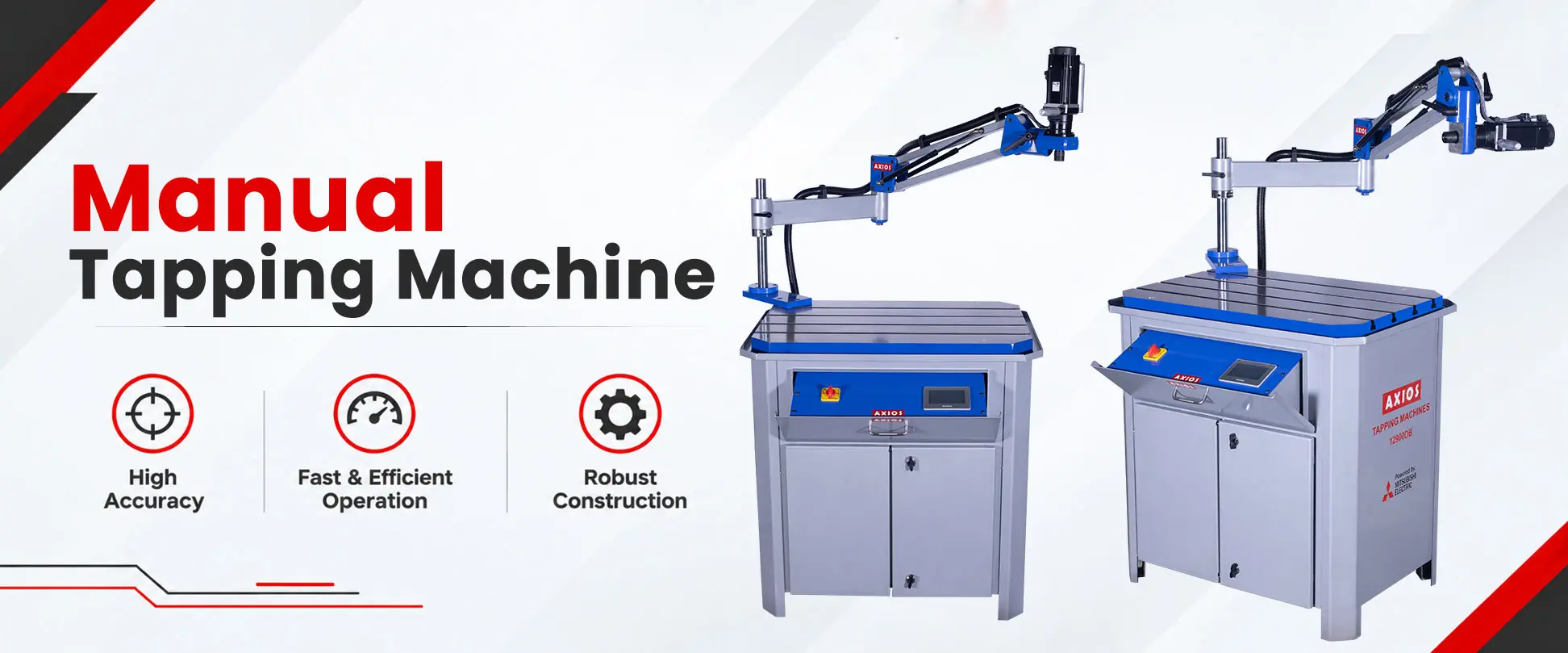
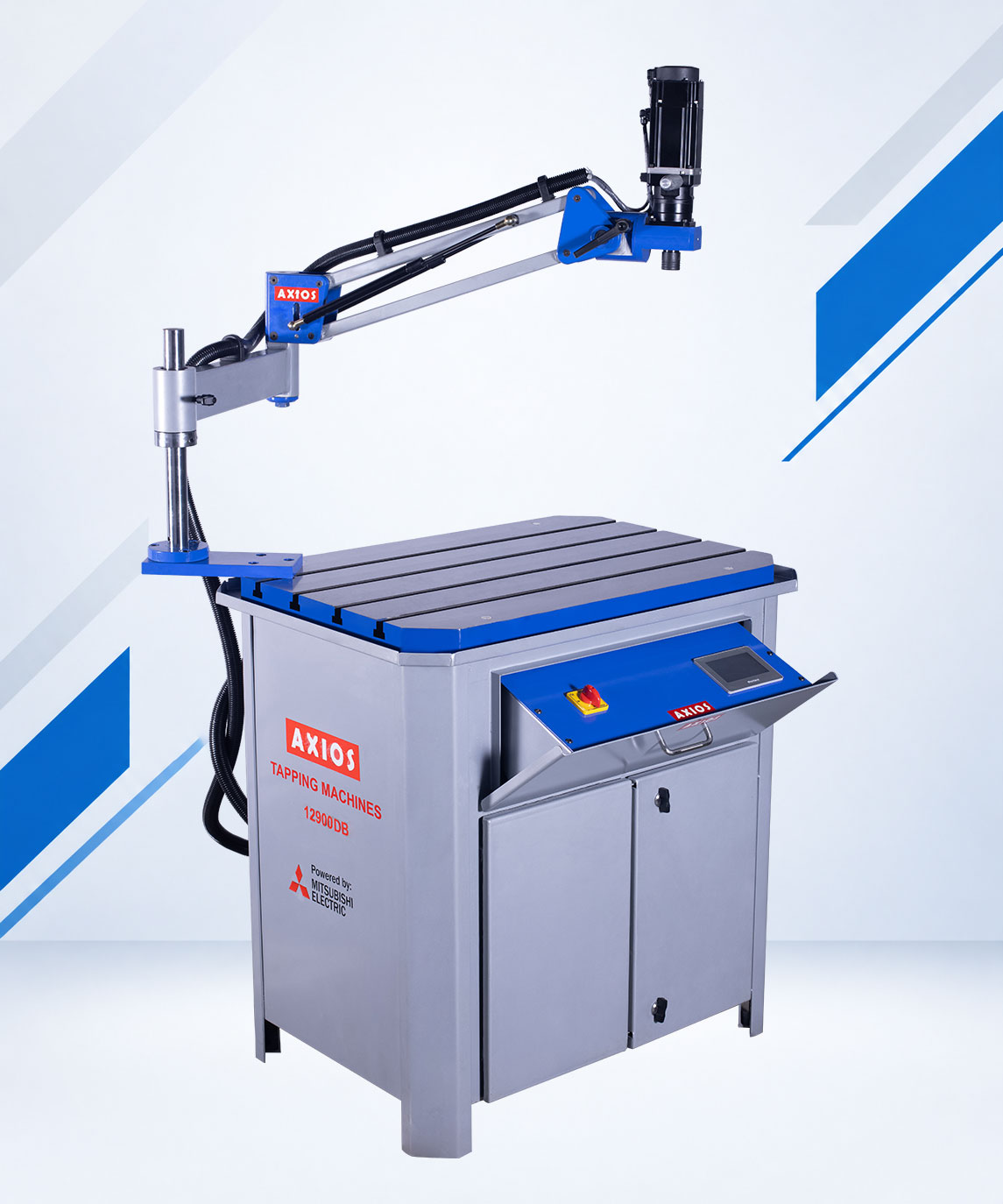
Providing the Best Performance Option of Manual Tapping Machines alongwith Automatic Tapping
A manual tapping machine is the traditional method of cutting threads using a tap wrench or hand tap. The operator holds and turns the tap by hand, guiding it into the drilled hole and judging depth by feel, alignment, depth, and reverse. It’s still common on very small jobs or single-piece work, but it comes with real limitations once volume goes up. Hand tapping is a slow and tiring process. The thread quality depends entirely on the worker’s grip and experience, taps wear out quicker from uneven pressure, and long shifts lead to real worker fatigue.
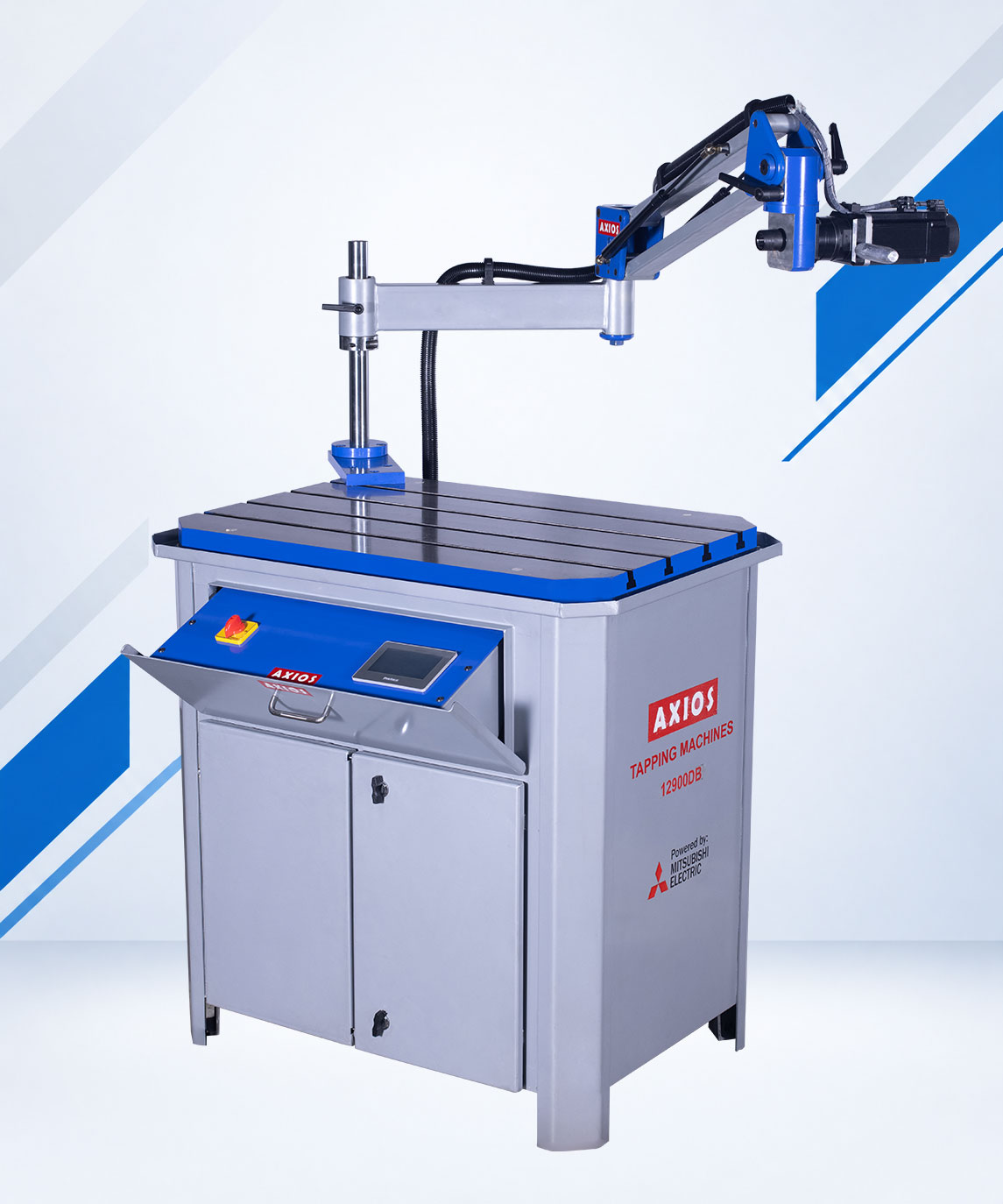
Our tapping arms include a Manual cycle mode alongside Auto and Peck, letting the operator guide positioning and depth directly while the electric motor still does the actual turning work. This makes it a genuine electric hand tapping machine experience — hands-on control, but with consistent power behind every tap instead of relying on arm strength. AXIOS Machines is recognised among trusted manual tapping machine manufacturers in India for building this flexibility into every series rather than offering manual control as a separate product.
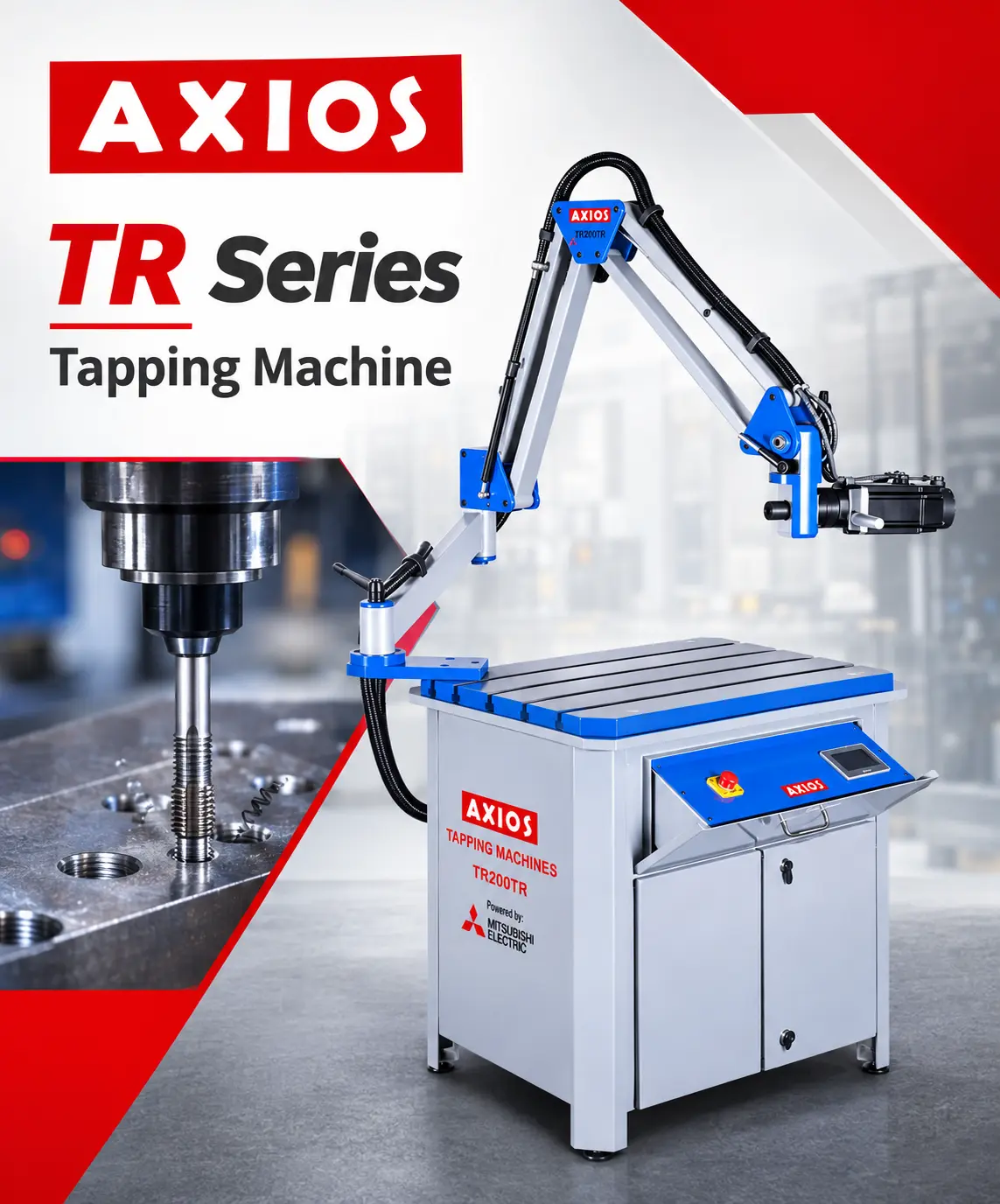
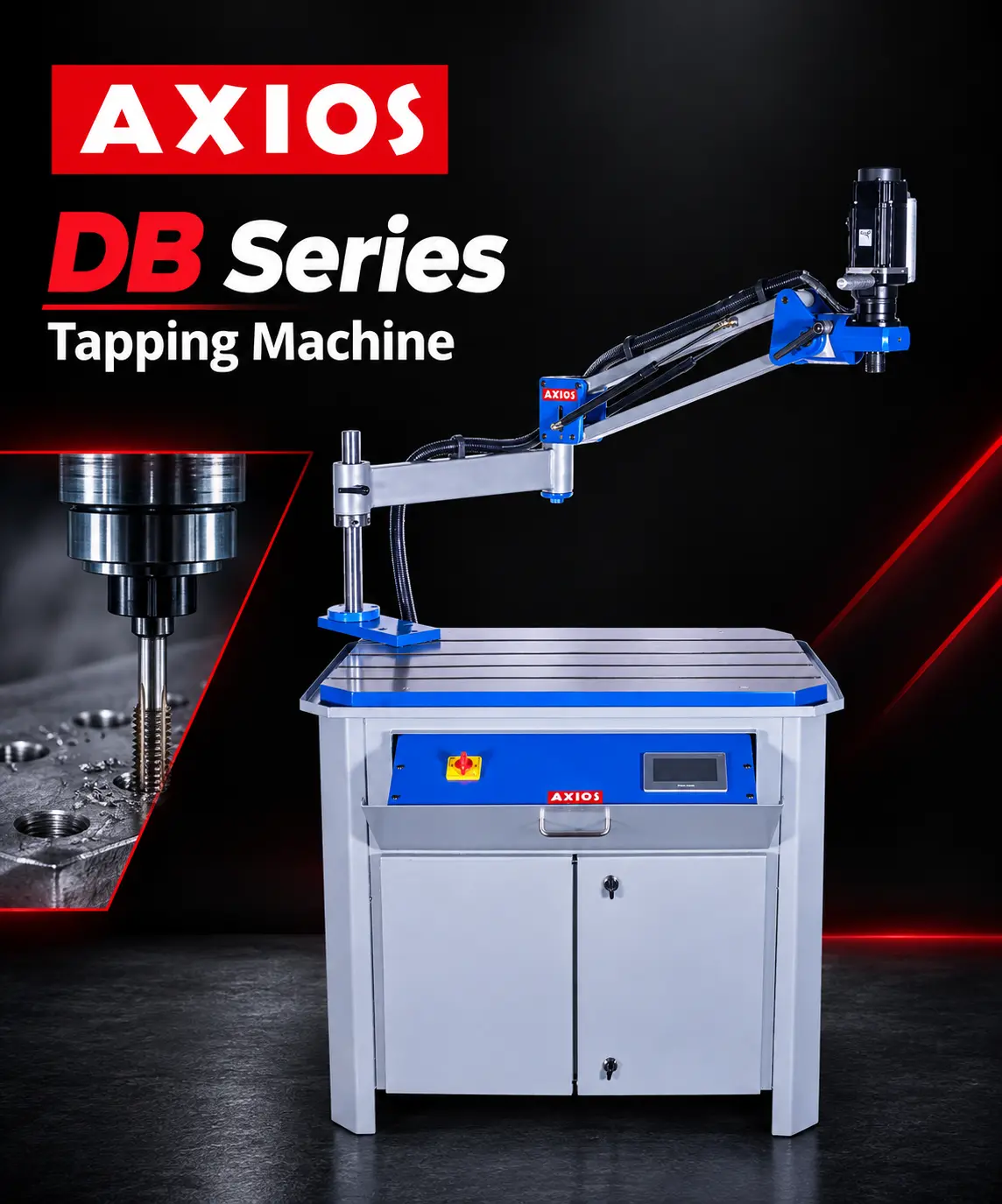
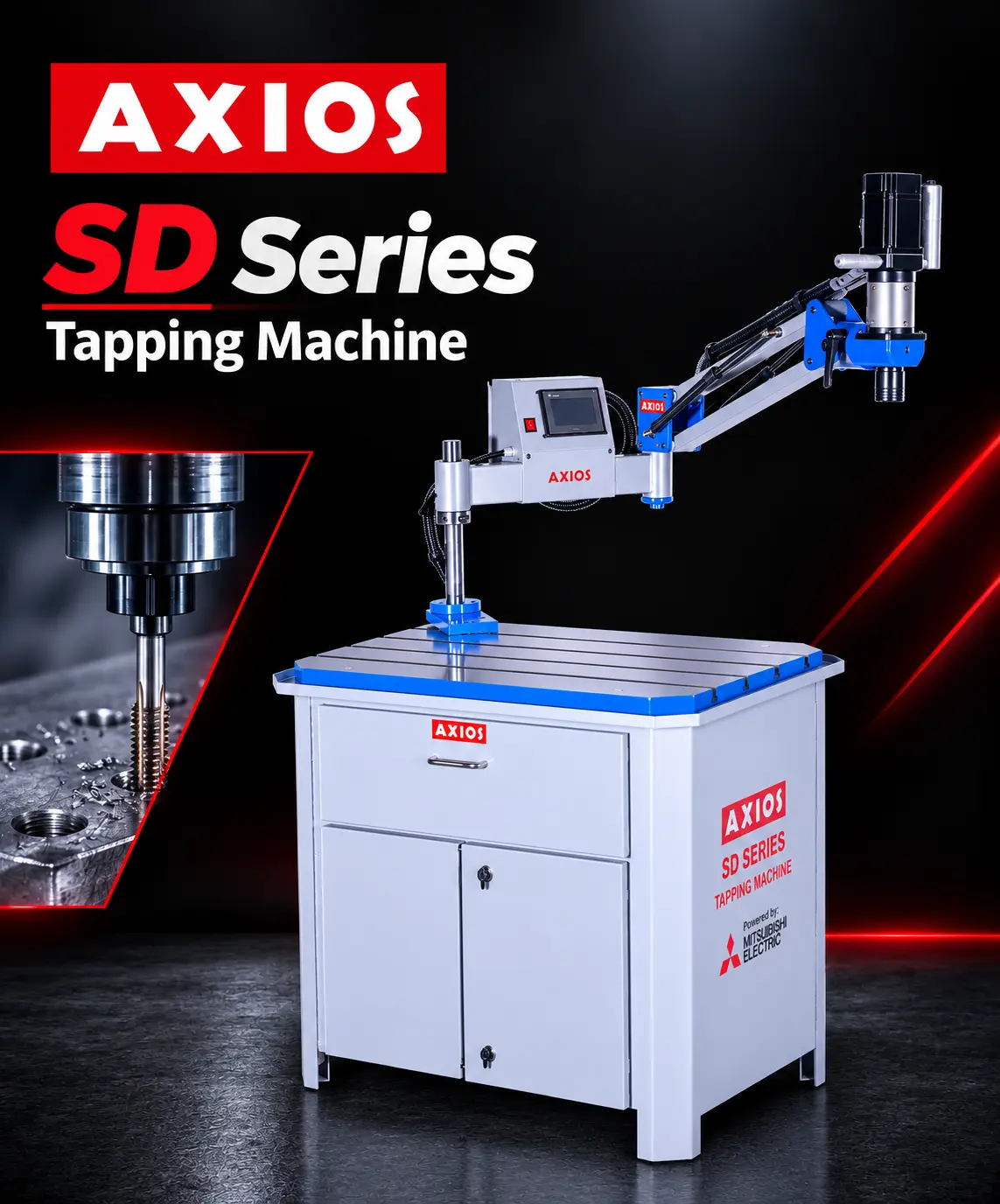
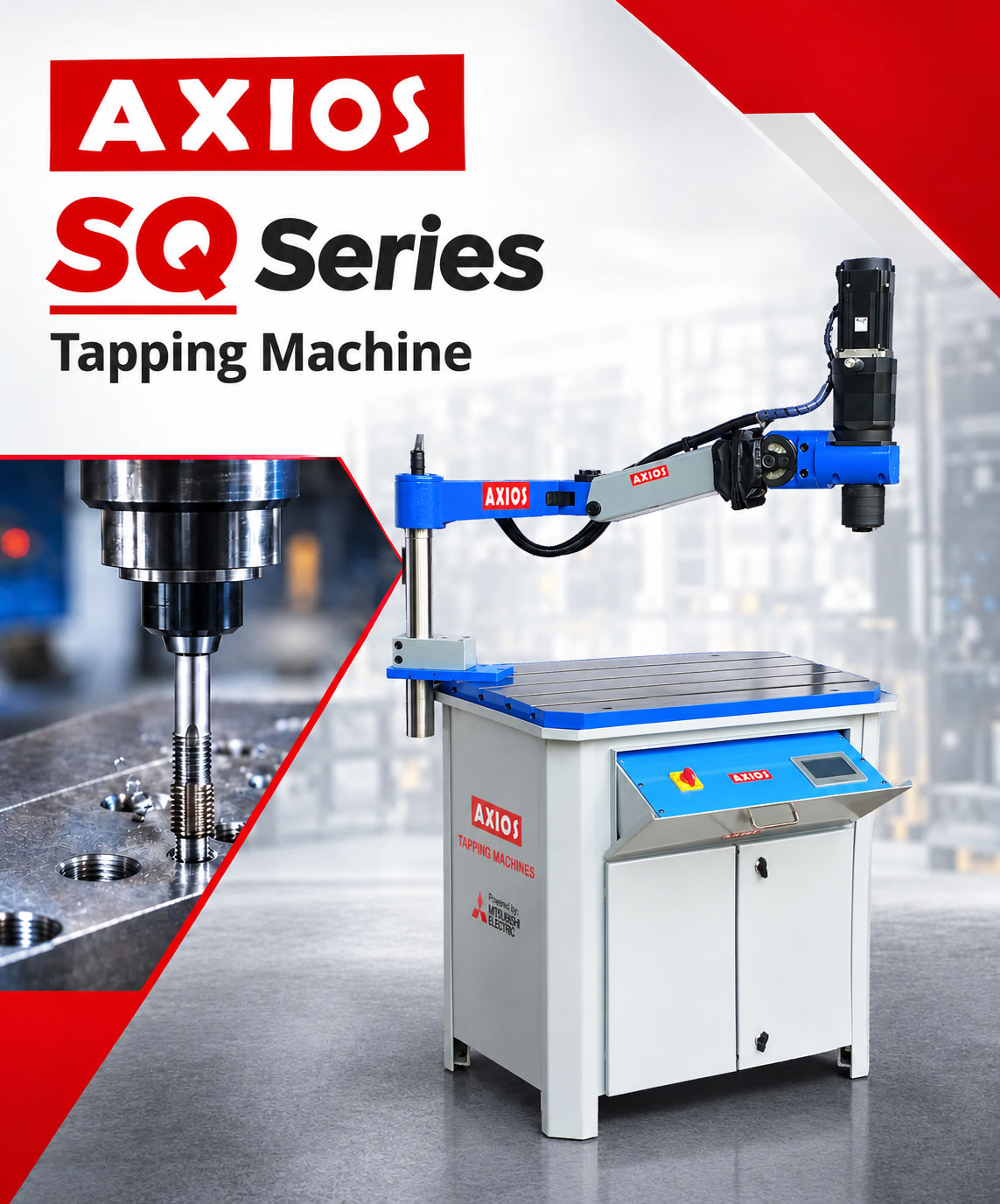
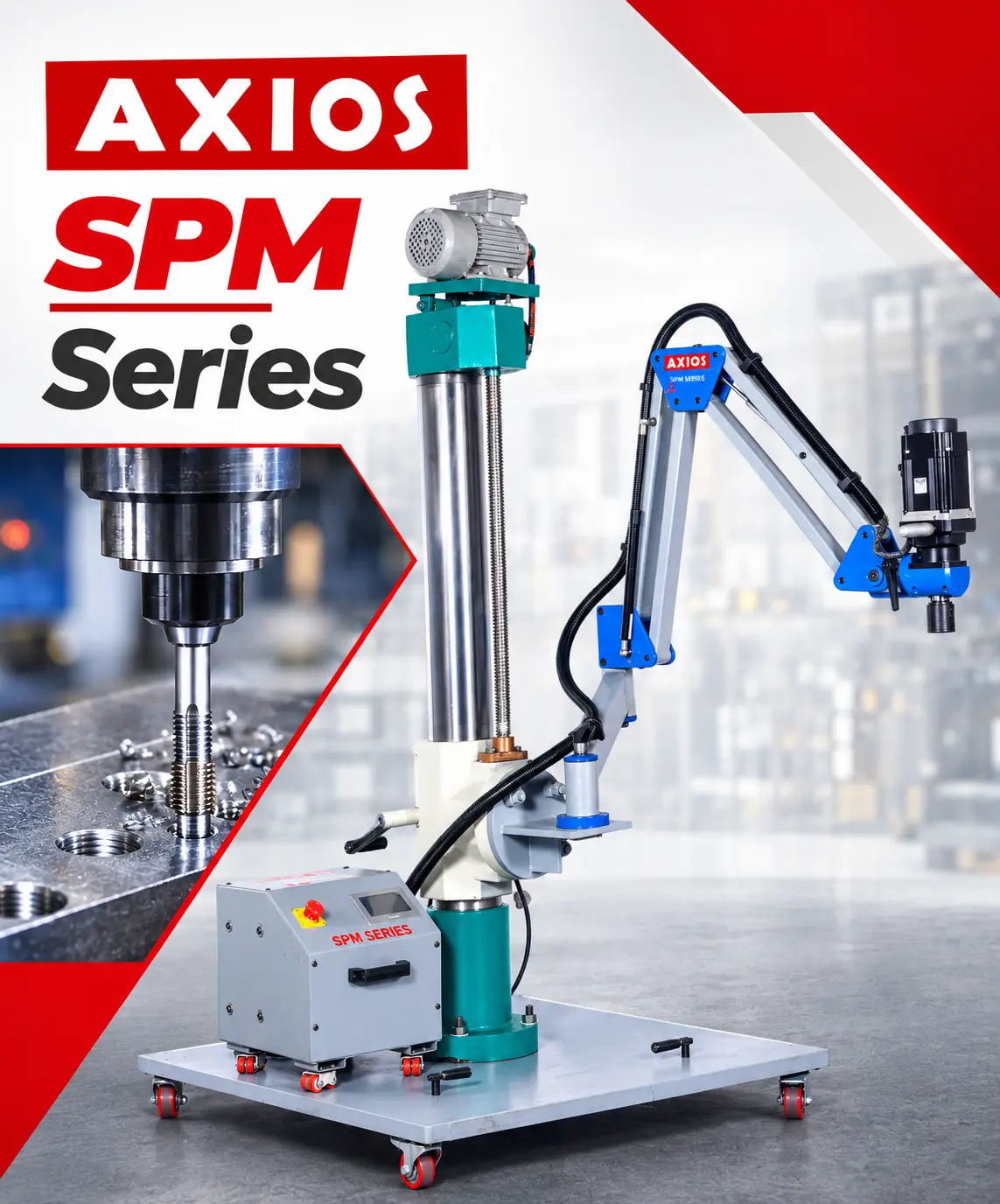
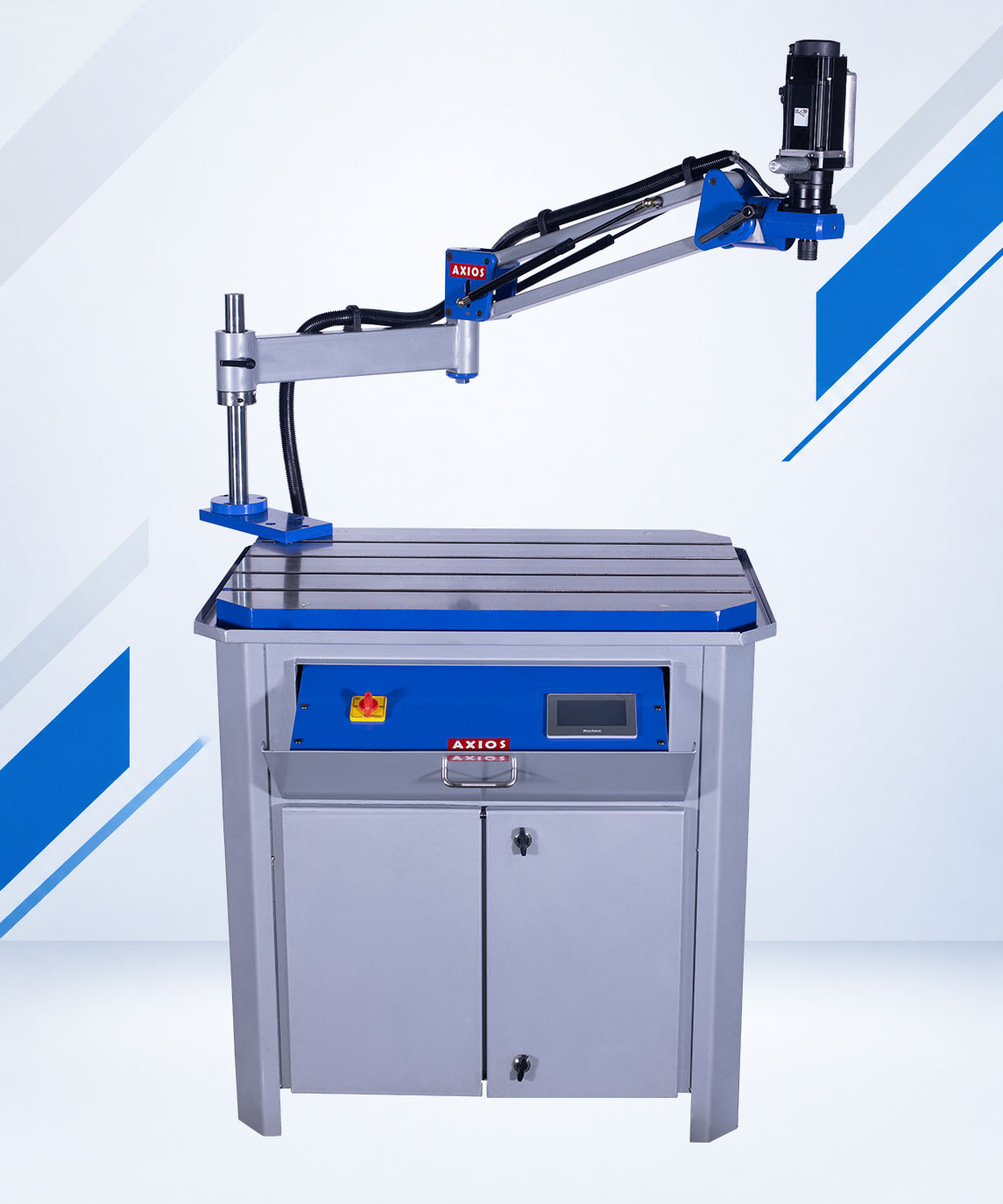
Available Tapping Machine Models
Discover our available tapping machine models, engineered for accurate and efficient tapping operations. Each model is designed to deliver consistent performance across various applications.
Look for the Reliable Suppliers of Manual Taping Machines
Switching to manual mode is useful for prototype parts, mixed job batches, or situations where an operator wants to feel the tap engage before committing to full depth, all without sacrificing the accuracy of a powered arm. This keeps thread quality far more consistent than tapping entirely by hand, since the machine still carries the load and controls rotation, while the operator simply manages positioning and stopping point.
We apply this same manual mode across its tapping range, meaning buyers aren’t stuck choosing between full automation and old-fashioned hand tapping. When comparing manual tapping machine suppliers in India, ask whether manual mode is a standard feature or a separate model, since not every manufacturer builds it into their base machines the way AXIOS does.
Features & Applications Of Manual Tapping Machines
It is used when an operator wants direct control over positioning and depth during tapping, such as for prototype parts or mixed job batches, while still using a powered electric arm rather than a hand tool.
An electric hand tapping machine uses a motor to handle the actual turning and torque, while the operator guides positioning and depth manually, which reduces physical strain and improves consistency compared to tapping with a hand wrench.
Manual cycle mode is built into AXIOS’s tapping arms as a standard cycle option alongside Auto and Peck, so it’s available across the range rather than limited to one separate model.
Manual mode works well for prototype parts, one-off jobs, or situations where an operator wants to feel the tap engage before committing to full depth, rather than running a preset automatic cycle.
Not significantly for experienced operators, since the machine still controls rotation and torque. Automatic mode simply removes the need for the operator to judge timing and depth themselves.
Confirm whether manual cycle mode comes standard with the machine or as an add-on, and ask how the switch between manual, auto, and peck modes works during daily operation.
Look for suppliers who train operators on using manual mode effectively, along with regular servicing, since operator technique still plays a role in thread quality even with powered assistance.